
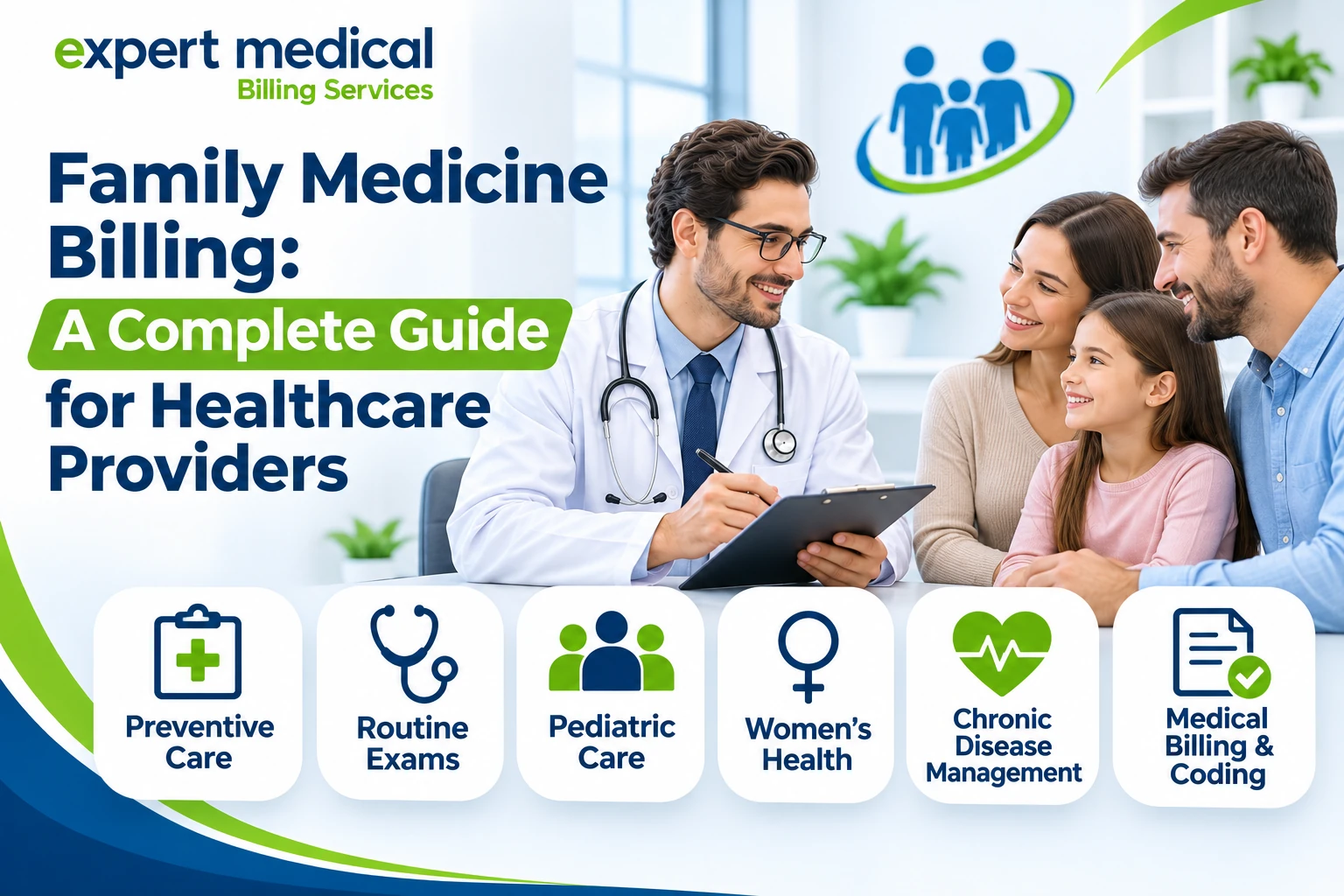
Family medicine plays an important role in the healthcare system by providing continuous, comprehensive medical care to individuals and families at every stage of life. From routine health examinations and preventive screenings to chronic disease management and treatment of everyday illnesses, family medicine providers help patients maintain better overall health.
Unlike medical specialties that focus on a particular organ or age group, family medicine takes a broader approach to patient care. Family physicians develop long-term relationships with their patients, understand their medical histories, and help coordinate different aspects of their healthcare.
However, managing a family medicine practice involves more than providing quality medical treatment. Healthcare providers must also handle patient registration, insurance verification, medical coding, claim submission, payment posting, and denial management. These administrative responsibilities make accurate medical billing essential for maintaining a financially healthy practice.
This guide explores family medicine, its common services, medical billing procedures, frequently used CPT and ICD-10-CM codes, common billing challenges, and strategies that can help healthcare providers improve their revenue cycle performance.
1. What Is Family Medicine?
Family medicine is a primary care specialty that focuses on providing comprehensive healthcare to patients of different ages, genders, and medical backgrounds. Family physicians are trained to diagnose, treat, and manage a wide range of health conditions while supporting preventive care and long-term wellness.
A family medicine provider may treat children, teenagers, adults, and older individuals within the same practice. This approach allows families to receive healthcare from a familiar provider who understands their medical histories and ongoing health needs.
Family medicine generally focuses on three important areas:
Preventive healthcare: Helping patients avoid illnesses through regular checkups, screenings, vaccinations, and lifestyle recommendations.
Acute care: Diagnosing and treating short-term health problems such as infections, fever, minor injuries, and respiratory illnesses.
Chronic disease management: Supporting patients who live with ongoing conditions such as diabetes, hypertension, asthma, and heart disease.
Family physicians also help patients understand their health conditions, make informed treatment decisions, and receive referrals when specialized medical attention is necessary.
Common Services Provided by Family Medicine Practices
Family medicine practices offer a broad range of healthcare services. The exact services available depend on the provider’s training, clinical setting, and scope of practice.
Some of the most common services include:
Routine Physical Examinations
Regular physical examinations help physicians evaluate a patient’s general health and identify potential medical concerns. These visits may include reviewing medical history, checking vital signs, discussing symptoms, and recommending appropriate preventive screenings.
Preventive Care and Wellness Visits
Preventive healthcare focuses on identifying health risks before they develop into more serious problems. Family physicians may provide wellness examinations, lifestyle counseling, preventive screenings, and health education.
Chronic Disease Management
Many patients require ongoing medical attention for conditions such as diabetes, hypertension, high cholesterol, and asthma. Family medicine providers monitor these conditions, review treatment progress, adjust care plans when appropriate, and help patients manage their health over time.
Pediatric Healthcare
Family medicine physicians may provide healthcare for infants, children, and teenagers. Common services include childhood wellness examinations, immunizations, developmental assessments, and treatment of common childhood illnesses.
Women’s Healthcare
Depending on their training and practice scope, family physicians may provide women’s health services, preventive screenings, reproductive health counseling, and routine examinations.
Immunizations and Vaccinations
Vaccinations help protect individuals and communities against preventable diseases. Family medicine practices may administer recommended vaccines based on a patient’s age, health status, and applicable immunization guidelines.
Treatment of Acute Illnesses
Patients frequently visit family medicine practices for common health concerns such as seasonal infections, sore throats, ear infections, allergies, fever, and minor injuries.
Health Screenings
Family physicians may recommend screenings for conditions such as high blood pressure, diabetes, high cholesterol, and certain cancers, depending on patient-specific risk factors and clinical guidelines.
Understanding Family Medicine Medical Billing
Family medicine medical billing is the process of translating healthcare services into accurate claims for reimbursement from insurance companies or other responsible payers.
Because family medicine practices provide many different types of services, their billing processes require careful attention to documentation, coding, insurance requirements, and payer-specific policies.
A typical family medicine billing process includes the following steps:
Step 1: Patient Registration
The process begins when the patient schedules an appointment or arrives at the practice. Staff members collect essential information, including the patient’s name, contact details, date of birth, insurance information, and medical record details.
Accurate registration helps prevent administrative errors and claim rejections.
Step 2: Insurance Eligibility Verification
Before providing services, the billing team verifies the patient’s insurance coverage. This process helps confirm active eligibility, applicable benefits, copayments, deductibles, coinsurance, and referral or authorization requirements.
Verifying insurance information in advance can reduce unexpected billing problems.
Step 3: Medical Documentation
After examining the patient, the physician documents the visit, including the patient’s symptoms, medical history, examination findings, assessment, and treatment plan.
Complete and accurate documentation provides the foundation for appropriate medical coding and billing.
Step 4: Medical Coding
The coding team reviews the physician’s documentation and assigns the appropriate CPT and ICD-10-CM codes.
CPT codes describe the medical services performed, while ICD-10-CM codes identify the patient’s diagnoses, symptoms, and medical conditions.
Correct code selection is important because inaccurate coding can result in claim denials, payment delays, or compliance concerns.
Step 5: Charge Entry and Claim Creation
Once coding is completed, the billing team enters the charges into the practice management system. The information is reviewed to ensure that patient details, provider information, service codes, diagnosis codes, and modifiers are accurate.
Step 6: Claim Submission
The completed claim is submitted electronically to the appropriate insurance payer, usually through a clearinghouse.
The clearinghouse checks claims for certain formatting and data errors before forwarding them to the insurance company. However, passing clearinghouse edits does not guarantee payer approval.
Step 7: Payment Posting
After processing the claim, the insurance company sends an Explanation of Benefits (EOB) or Electronic Remittance Advice (ERA).
The billing team records payments, contractual adjustments, patient responsibilities, and any remaining balances in the billing system.
Step 8: Denial Management and Follow-Up
If a claim is denied or underpaid, the billing team reviews the reason, identifies the underlying issue, and takes appropriate action. This may involve correcting the claim, submitting supporting documentation, or filing an appeal when justified.
Consistent follow-up helps family medicine practices prevent unpaid claims from remaining unresolved.
Common CPT Codes Used in Family Medicine
Current Procedural Terminology (CPT) codes are used to describe medical procedures and services performed by healthcare professionals.
Family medicine practices frequently report Evaluation and Management (E/M) codes for office visits. The appropriate code depends on the patient’s status, medical decision-making (MDM), or qualifying total time, as applicable under current coding guidelines.
Some commonly used office and outpatient E/M codes include:
| CPT Code | Description |
| 99202 | New patient office visit, straightforward MDM |
| 99203 | New patient office visit, low MDM |
| 99204 | New patient office visit, moderate MDM |
| 99205 | New patient office visit, high MDM |
| 99212 | Established patient office visit, straightforward MDM |
| 99213 | Established patient office visit, low MDM |
| 99214 | Established patient office visit, moderate MDM |
| 99215 | Established patient office visit, high MDM |
Other service categories that may appear in family medicine billing include:
Preventive medicine services.
Immunization administration.
Diagnostic testing.
Laboratory services.
Care management services.
Transitional care management.
Chronic care management.
The actual CPT code must reflect the service performed, supporting documentation, applicable code requirements, and payer guidelines. Providers should consult the current CPT code set before submitting claims.
Common ICD-10-CM Diagnosis Codes in Family Medicine
ICD-10-CM codes identify the diagnoses, symptoms, and health conditions documented during patient encounters.
Family medicine providers treat a wide variety of conditions, so accurate diagnosis coding is especially important.
Below are examples of commonly encountered ICD-10-CM codes:
| ICD-10-CM Code | Description |
| I10 | Essential (primary) hypertension |
| E11.9 | Type 2 diabetes mellitus without complications |
| J06.9 | Acute upper respiratory infection, unspecified |
| E78.5 | Hyperlipidemia, unspecified |
| Z00.00 | Encounter for general adult medical examination without abnormal findings |
| R50.9 | Fever, unspecified |
| M54.5 | Low back pain (legacy code; current coding requires a more specific applicable code) |
| J45.909 | Unspecified asthma, uncomplicated |
Diagnosis codes should always be selected according to the physician’s documentation and the current ICD-10-CM code set. The code that best represents the patient’s actual condition should be reported rather than choosing a code simply because it is commonly used.
Important Modifiers Used in Family Medicine Billing
Modifiers provide additional information about the circumstances surrounding a medical service. They can clarify how or why a service was performed without changing the primary procedure code.
Some modifiers that may be relevant to family medicine billing include:
Modifier 25 – Significant, Separately Identifiable E/M Service
Modifier 25 is used when a physician performs a significant, separately identifiable evaluation and management service on the same day as another procedure or service.
For example, a patient may visit a family physician for an evaluation of a new medical concern and also receive a minor procedure during the same encounter. If the E/M service is separately identifiable and supported by documentation, modifier 25 may be appropriate.
Modifier 59 – Distinct Procedural Service
Modifier 59 indicates that a procedure or service is distinct from another service that would otherwise be considered bundled under applicable coding rules.
It should only be reported when the documentation supports the specific circumstances required by the coding guidelines. More specific X{E} modifiers may be preferable when applicable.
Modifier 95 – Synchronous Telemedicine Service
Modifier 95 identifies certain synchronous telemedicine services delivered through real-time interactive audio and video communication.
Its use depends on the applicable CPT instructions, payer policies, and telehealth billing requirements.
Incorrect modifier selection can create reimbursement problems, trigger claim reviews, and increase denial rates. Billing teams should carefully review documentation and payer-specific rules before applying modifiers.
Common Family Medicine Billing Challenges
Family medicine practices manage multiple service types, insurance plans, and patient populations. These factors can create billing difficulties if administrative processes are not properly managed.
Here are some common challenges:
Incorrect Medical Coding
Selecting an incorrect CPT or ICD-10-CM code can create inconsistencies between the physician’s documentation and the submitted claim. This may lead to denials, underpayments, or additional reviews.
Insurance Eligibility Problems
Patients’ insurance coverage can change because of employment changes, policy updates, or enrollment issues. Submitting claims without confirming current eligibility can result in avoidable rejections or denials.
Incomplete Medical Documentation
Missing examination details, unclear diagnoses, or insufficient documentation can make it difficult to support the services reported on a claim.
Modifier Errors
Incorrect modifier usage may cause claims to be denied or incorrectly processed. Each modifier must meet the relevant coding and payer requirements.
Claim Submission Delays
Late claim submissions can affect reimbursement timelines and may result in timely filing denials.
High Claim Denial Rates
Claims may be denied because of incorrect patient information, coding errors, missing authorization, coverage limitations, or payer-specific requirements.
Accounts Receivable Challenges
Unpaid and underpaid claims can accumulate when follow-up activities are inconsistent. Poor A/R management may negatively affect the financial performance of a family medicine practice.
Best Practices to Improve Family Medicine Billing
A well-organized billing process helps healthcare providers maintain accurate records, reduce avoidable errors, and improve reimbursement efficiency.
Family medicine practices can consider the following strategies:
1. Verify Insurance Before Appointments
Confirming insurance eligibility before a patient’s visit helps identify coverage issues and understand potential financial responsibilities.
2. Maintain Complete Documentation
Physicians should document relevant clinical information clearly and consistently. Strong documentation supports accurate coding and helps justify the services reported.
3. Use Accurate Medical Codes
Billing teams should review current CPT and ICD-10-CM guidelines to ensure that reported codes accurately represent the services and diagnoses documented.
4. Submit Clean Claims Promptly
Review claims for missing information, incorrect codes, and other common errors before submission. Timely and accurate claim submission supports a smoother reimbursement process.
5. Monitor Accounts Receivable Regularly
Review outstanding claims and prioritize follow-up based on payer requirements, claim age, and financial value.
6. Review Denials and Identify Patterns
Instead of correcting individual denials without further analysis, practices should identify recurring problems and address their root causes.
7. Stay Updated on Payer Policies
Insurance companies may update their coverage rules, documentation requirements, and reimbursement policies. Regularly reviewing these changes helps reduce compliance and billing issues.
How Outsourcing Medical Billing Benefits Family Medicine Practices
Managing an entire billing department internally can require significant time, staffing, training, and technology resources. For some family medicine practices, outsourcing medical billing provides an alternative way to manage administrative responsibilities.
A professional medical billing company can support different stages of the revenue cycle while allowing healthcare providers to focus more attention on patient care.
Here are some important benefits of outsourcing:
Improved Coding and Billing Accuracy
Experienced billing professionals review claims, coding details, and documentation requirements to help reduce preventable errors.
Faster Claim Processing
An organized billing workflow supports timely charge entry, claim submission, and follow-up, helping reduce unnecessary processing delays.
Effective Denial Management
Billing specialists investigate denied claims, identify common issues, and coordinate appropriate corrections or appeals based on payer requirements.
Better Accounts Receivable Management
Consistent follow-up on unpaid and underpaid claims helps practices monitor outstanding revenue and address delayed reimbursements.
Reduced Administrative Workload
Outsourcing can reduce the burden of managing billing-related tasks internally, allowing practice staff to dedicate more time to patient coordination and daily operations.
Greater Operational Efficiency
Professional billing support can provide structured workflows, reporting, and performance monitoring that help practices understand their revenue cycle activities.
Lower Staffing and Operational Burden
Depending on the practice’s size and existing resources, outsourcing may reduce the need to maintain a full in-house billing department.
The results depend on the billing company’s expertise, the practice’s workflow, payer requirements, and the quality of clinical documentation.
Why Choose EMBS for Family Medicine Billing Services?
Family medicine practices need a billing partner that understands the importance of accuracy, consistency, and efficient revenue cycle management.
Expert Medical Billing Services (EMBS) supports healthcare providers with professional medical billing solutions designed to simplify administrative processes and strengthen financial operations.
Our services include:
Medical Coding: Supporting accurate CPT and ICD-10-CM code assignment based on provider documentation.
Insurance Verification: Helping confirm patient eligibility and insurance benefits before appointments.
Charge Entry: Ensuring that documented services and charges are accurately entered into the billing system.
Claims Submission: Supporting timely and accurate electronic claim submission.
Denial Management: Identifying claim denial reasons and coordinating appropriate corrections and appeals.
Accounts Receivable Management: Following up on outstanding claims to help reduce aging receivables.
Payment Posting: Recording insurance and patient payments while identifying outstanding balances.
At EMBS, our goal is to help healthcare practices simplify billing operations, reduce administrative pressure, and maintain a more organized revenue cycle.
Conclusion
Family medicine is an essential part of healthcare because it provides comprehensive medical services to patients throughout their lives. However, maintaining a successful family medicine practice requires more than delivering quality treatment. Accurate documentation, appropriate medical coding, timely claim submission, and consistent payment follow-up are equally important.
By understanding common CPT codes, ICD-10-CM diagnosis codes, modifier requirements, and billing challenges, healthcare providers can make better decisions about their revenue cycle operations.
Whether a practice manages billing internally or works with an experienced outsourcing partner, an organized billing process can help reduce preventable errors, improve claim management, and support long-term financial stability.
EMBS – Expert Medical Billing Services is committed to helping healthcare providers manage their billing responsibilities with greater accuracy and efficiency, so they can focus on what matters most: providing quality patient care.