

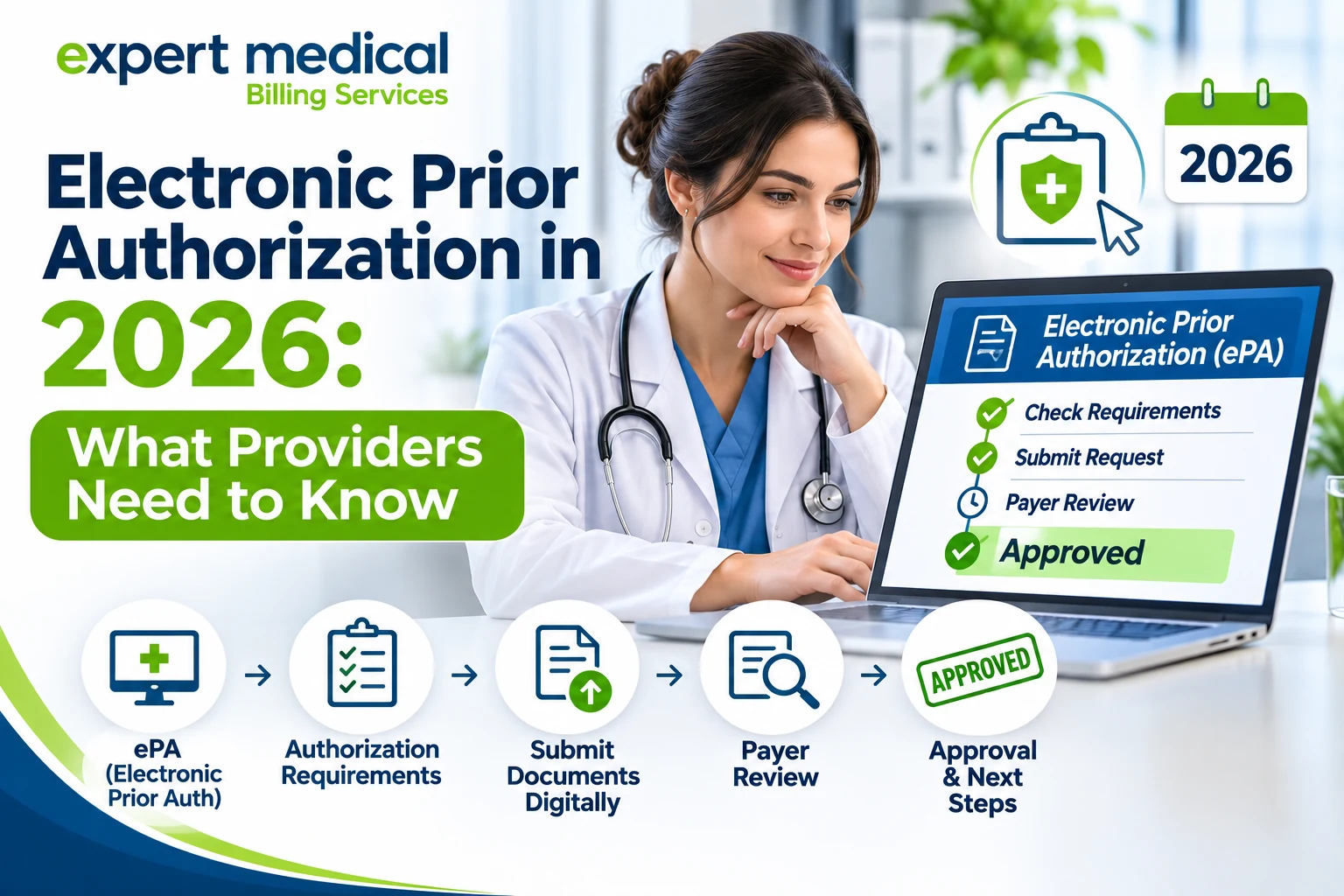

Prior authorization has become an important part of the healthcare revenue cycle. Before certain medical services, procedures, medications, or equipment can be covered, a healthcare provider may need approval from the patient’s insurance plan. While prior authorization is intended to help payers determine whether care meets coverage requirements, the process has traditionally involved significant administrative work.
Phone calls, faxed forms, payer portals, documentation requests, follow-ups, and status checks can consume valuable staff time. When information is missing or an authorization is not obtained correctly, the problem can continue into the billing process and potentially result in delays, rework, or claim denials.
In 2026, the healthcare industry is moving further toward electronic prior authorization (ePA), interoperability, and standardized digital workflows. The Centers for Medicare & Medicaid Services (CMS) has already implemented important prior authorization requirements for certain impacted payers, while additional electronic API requirements are scheduled for 2027. CMS is also proposing further changes involving electronic prior authorization for drugs.
For healthcare providers, 2026 is therefore an important year to understand how electronic prior authorization works, how it affects revenue cycle management, and what practices can do now to prepare for the next stage of digital authorization.
What Is Electronic Prior Authorization?
Electronic prior authorization is the digital exchange of information between healthcare providers and payers to request and manage approval for services that require authorization.
Instead of depending primarily on phone calls, fax machines, paper forms, or separate manual processes, electronic workflows can allow providers to determine whether authorization is needed, identify applicable coverage requirements, submit supporting information, and track requests through connected systems.
Modern electronic prior authorization efforts are closely connected with interoperability standards and application programming interfaces (APIs). CMS is working with health plans, healthcare organizations, and electronic health record (EHR) vendors to make these workflows more integrated with provider technology.
It is important to remember that electronic prior authorization does not mean every request is automatically approved or processed instantly. A payer may still need clinical review, additional documentation, or other information before making a decision.
Why Is Electronic Prior Authorization Important in 2026?
Prior authorization can affect both patient care and the financial health of a medical Practice.
When a authorization is delayed, staff may need to spend additional time following up with the payer. A missing authorization can also create problems when a claim is submitted after the service has been performed.
CMS has taken significant steps to improve prior authorization processes. Under the 2024 CMS Interoperability and Prior Authorization final rule, certain impacted payers-including Medicare Advantage organizations, state Medicaid programs, Medicaid managed care plans, CHIP programs and managed care entities, and certain Qualified Health plan issues- are subject to prior authorization requirements. Beginning in 2026. Impacted payers generally must provide decisions for applicable medical items and services within subject to program-specific rules and exceptions.
CMS also requires certain impacted payers to provide a specific reason when a prior authorization request is denied, helping providers understand what needs to be addressed when resubmitting or appealing a request.
These changes are important because better communication and more predictable workflows can help providers manage authorization requests more effectively.
How Does Electronic Prior Authorization Work?
Although workflows can differ between payers and technology systems, the general process can be understood in several steps.
1. Identify Whether Authorization Is Required
The process begins by determining whether the planned service requires prior authorization
Requirements can vary according to the payer, patient’s plan, service, procedure, medication, diagnosis, location, and other factors. Staff should verify the applicable requirements instead of assuming that the same rules apply to every insurance plan.
2. Verify Patient Eligibility
Before moving forward, the practice should confirm the patient’s insurance coverage and eligibility.
Eligibility verification and prior authorization are related but different processes. A patient can be eligible for insurance while a particular service may still require prior authorization.
3. Review Payer Requirements
Once the need for authorization is established, staff should determine what information the payer requires.
This may include:
- Patient information
- Provider information
- CPT or HCPCS codes
- Diagnosis codes
- Clinical documentation
- Treatment history
- Referral information
- Test results
- Medical records
- Supporting documentation
4. Gather Complete Documentation
Incomplete documentation can create unnecessary delays. The billing or authorization team should review the request carefully before submission.
Accurate documentation can make it easier for the payer to evaluate whether the requested service meets the applicable coverage criteria.
5. Submit the Request
Depending on the payer and available technology, a prior authorization request may be submitted electronically through an integrated system, API, payer portal, or another approved channel.
CMS’s electronic prior authorization initiative is moving toward standardized API- based workflows, but the broader electronic infrastructure requirements for certain impacted payers generally begin January 1 2027.
6. Monitor the Request
Submitting an authorization request is not the end of the process.
The provider’s team should monitor:
- Request status
- Additional information requests
- Approval
- Denial
- Expiration dates
- Payer communications
7. Record the Decision
Once the payer responds, authorization details should be documented appropriately in the practice’s system. The team should verify that the authorization matches the planned service and applicable dates before the service is performed whenever possible.